The Mississippi Legislature has taken a notable step in the ongoing conversation around education policy. This week, the House Education Committee voted 14–11 to advance a school choice proposal, commonly referenced as House Bill 2, moving it forward for consideration by the full House.
At this stage, the bill has not become law. The vote simply allows the proposal to proceed in the legislative process, where further debate, amendment, and votes will determine its future. Still, the committee’s narrow margin underscores that this topic remains complex, closely watched, and consequential for public education across the state.
For school leaders, moments like this are less about political reaction and more about professional awareness and strategic readiness.
What the Bill Proposes (at a High Level)
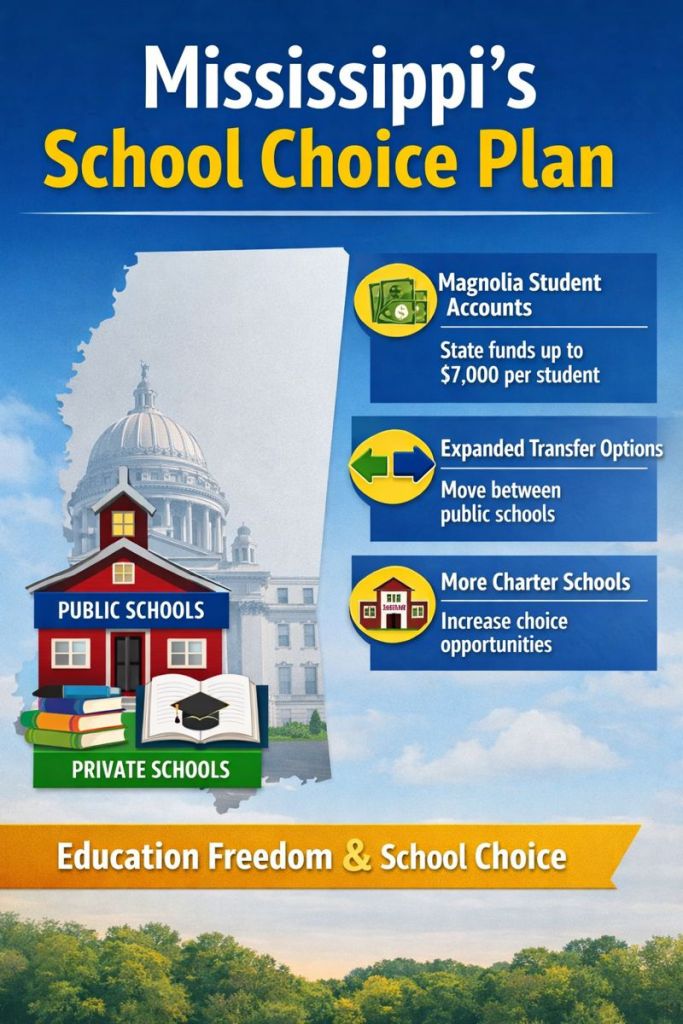
While details may continue to evolve, the proposal broadly aims to expand educational options for families. Among its concepts are state-supported education accounts that could allow eligible families to direct public funds toward approved educational services outside traditional district settings. The bill also reflects a broader national trend of examining how flexibility, access, and parental choice intersect with public education systems.
Again, it is important to emphasize: this is a proposal, not a final outcome.
Why This Matters for School Leadership
Regardless of where one stands philosophically, legislative discussions around school choice send a clear signal: public schools are increasingly being evaluated through the lens of value, trust, and performance.
For school leaders, especially those serving in public systems, the question is not “Do we agree?” but rather:
How do we lead well in an environment that is changing?
Policy shifts—real or proposed—often influence public perception long before they affect funding formulas or enrollment counts. That means leadership must stay grounded, proactive, and focused on the work that remains within our control.
How School Leaders Should Move Forward
First, stay informed. Understanding legislation at a factual level allows leaders to respond accurately to questions from staff, families, and community members without speculation or emotion.
Second, double down on what works. High-quality Tier 1 instruction, strong relationships, transparent communication, and consistent student growth remain the most powerful responses to uncertainty. Schools that are clear in purpose and strong in practice tend to weather policy shifts more effectively than those driven by reaction.
Third, lead with clarity, not fear. Legislative conversations can create noise. Effective leaders help their teams focus on mission, not headlines. Calm leadership creates stability for teachers, students, and families alike.
Finally, view this as a reminder—not a threat. Public education has always evolved in response to policy, economics, and societal expectations. Strong schools do not wait for legislation to define their value; they demonstrate it daily through outcomes, culture, and service to students.
A Closing Thought
Whether this bill advances further or stalls, its movement through committee highlights an ongoing reality: education leadership today requires both instructional excellence and policy literacy.
School leaders do not need to take sides to take responsibility. Staying informed, remaining neutral, and leading with integrity ensures that no matter what laws are debated or passed, schools continue to serve students with purpose, professionalism, and resolve.
School leaders remain committed to equipping others with the knowledge, clarity, and strategic thinking needed to lead well—especially when the landscape shifts.
Leadership Takeaways for School Administrators
1. Awareness is a leadership responsibility
School leaders don’t need to advocate to stay informed. Understanding policy conversations allows leaders to answer questions accurately and reduce misinformation before it spreads.
2. Stability matters more than opinion
During legislative uncertainty, staff and families look to school leaders for calm, not commentary. Clear direction and consistency build trust when external conversations grow louder.
3. Instruction remains the strongest response
High-quality Tier 1 instruction, student growth, and a strong school culture continue to be the most compelling evidence of a school’s value—regardless of policy debates.
4. Control the controllables
Enrollment shifts and funding models may change over time. Daily leadership practices—relationships, expectations, and instructional focus—remain firmly within a leader’s control.
5. Lead with professionalism, not prediction
Effective leaders avoid forecasting outcomes they can’t control. Instead, they prepare their organizations to succeed under multiple scenarios.
Legislative Update: Staff FAQ
Q: Did Mississippi pass a school choice law?
No. A proposal was advanced out of the House Education Committee. It has not been passed by the full House or Senate and is not law.
Q: Does this affect our school right now?
No. There are no immediate changes to school operations, staffing, enrollment, or funding.
Q: Why are we hearing about it now?
Committee votes are part of the legislative process. They often receive attention even though many bills do not advance further.
Q: Should teachers or staff be concerned?
At this time, there is no action required. Our focus remains on instruction, student success, and maintaining a strong school culture.
Q: What is the school’s role during legislative discussions like this?
Our role is to stay informed, communicate accurately, and continue serving students and families with consistency and professionalism.
Q: Will the administration keep us updated?
Yes. If any legislation moves forward in a way that directly affects schools, staff will receive clear, factual communication.
Most Importantly
While legislation may be discussed at the state level, our mission remains unchanged:
delivering high-quality instruction and supporting every student every day.
 School Leaders' Think Tank
Leave a comment